
 Reservation
 Contact

By Jess Lander, Staff Writer
Sep 24, 2025
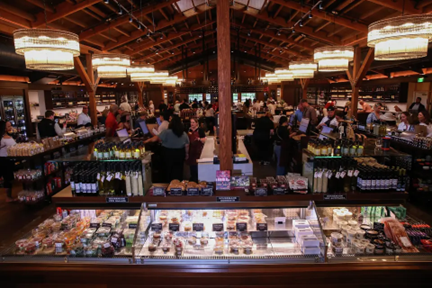
V. Sattui Winery just launched its remodeled, 8,000-square-foot marketplace, deli and tasting room.
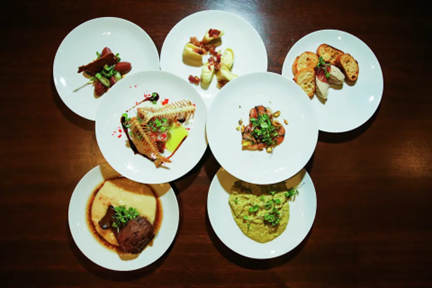
Visitors to V. Sattui can now order wine by the glass and order culinary pairings, like vegan foie gras and branzino tartare, created by a chef that owns a Michelin-starred restaurant.
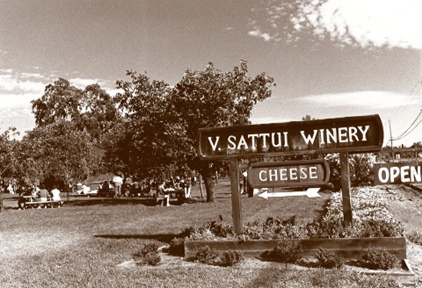
Founded in 1975, V. Sattui Winery was one of the first in Napa Valley to offer food and allow picnicking.
Yalonda M. James/S.F. Chronicle
Over the past year, one of Napa Valley’s most-visited wineries has been a shell of itself.
V. Sattui Winery underwent its first major renovation in 50 years, closing the popular tasting room and deli, and relegating many guests to lackluster trailers. Much of the winery’s famed picnic grounds were under construction, too, which tainted the experience and significantly limited the number of people the winery could host each day.
“Sales reduced dramatically,” said V. Sattui founder Dario Sattui, who also owns Castello di Amorosa, the 13th-century Tuscan castle in Calistoga that’s Napa Valley’s top tourist attraction.
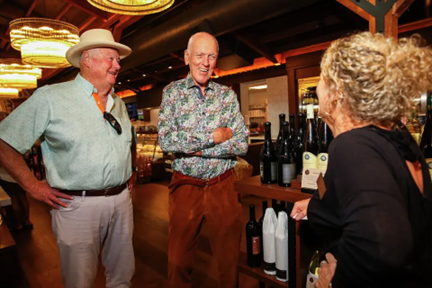
V. Sattui president Tom Davies, left, founder Dario Sattui, and Ali Paterson, vice president of marketing, chat inside the newly renovated V. Sattui Winery.
But now, V. Sattui’s renovation is wrapping up and the winery is primed for a major rebound, having just opened its new, 8,000-square-foot market, deli and tasting room complete with epic food offerings: Think over 200 cheeses, savory s’mores and vegan foie gras from a chef who runs a Michelin-starred restaurant.
Many of Napa Valley’s most classic estates have undergone expensive and modern transformations in the past decade, but V. Sattui’s is notably more modest in comparison, and the winery hasn’t raised prices, said winery president and managing partner Tom Davies. This embodies V. Sattui’s continued commitment to accessibility at a time when Napa Valley is widely considered too pricey and exclusive. Sattui has repeatedly resisted Wine Country trends: V. Sattui was one of the last wineries in the region to start charging for tastings — beginning at just $5 in 2007 — and despite being labeled a “gateway” or “Disneyland” winery by wine industry critics, it remains walk-in- and family-friendly. It also produces more than 50 different wines, including entry-level bottlings that, yes, are on the sweeter side.
Building a Napa icon from $5,000
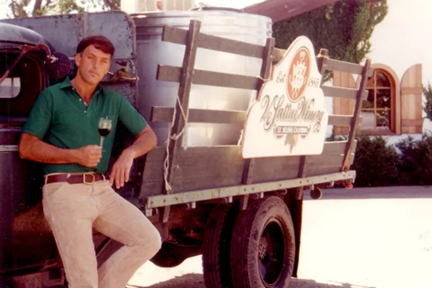
Founder Dario Sattui, now 84, started the winery with just $5,000 of his own money in 1975.
For decades, Sattui had dreamed of restarting his great-grandfather’s winery, which operated in San Francisco from the 1880s until Prohibition. He came to Napa Valley with just $5,000 of his own money and managed to raise a total of $62,500 to launch the winery, even convincing a realtor to buy the land and lease it to him.
Sattui “skimmed” on expenses wherever he could. His brother-in-law installed the roof of the original winery building, which he built for just $15 a square foot. He made all of his long-distance calls collect, and his desk consisted of a $3 “reject door” from the local lumber yard set atop two wine barrels. He crunched numbers with his grandfather’s hand-crank calculator and often slept in the winery or his van.
The next year, Sattui added tastings, setting up a small bar and deli counter among the barrels of the winery. It was one of the first Napa Valley wineries to offer food, and the deli was a revolutionary concept at the time. Sattui said he paid $200 for “an old, rusty deli case” and covered it in redwood. He couldn’t afford a cash register, so he wrote every sale down by hand and collected money in a wooden box. On opening day, the winery made $141; on the second day, $180. “My wife said, ‘I told you we’d go broke,’” Sattui recalled, adding that for the first seven or eight years, he worked seven days a week. “I had no money, no knowledge.”
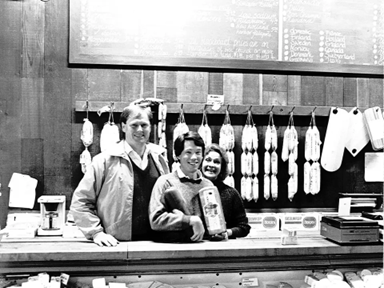
V. Sattui president Tom Davies, left, with V. Sattui’s first cheesemonger Keith Idle and deli manager Kathleen Knowles pose for a photo in the mid 1980s
In 1985, Sattui completed construction on a new winery facility, which enabled the tasting room and deli to expand. And around the same time, his creativity began to pay off. In addition to the deli, V. Sattui was one of the first Napa Valley wineries to allow picnicking and to host weddings. The winery was also the second in Napa Valley to launch a wine club, and started shipping wines out of state long before it was legal. The winery would load up wine on a Greyhound bus in Yountville, and club members would pick up orders from bus stops across the country. Later, V. Sattui would keep a low profile by printing “Bay Area Electronics” as the sender on the label.
For a while, “tourism was bleak,” Sattui recalled. “There were no good restaurants and there weren’t a lot of hotels.” A shift began in the late ’80s, and V. Sattui would regularly see over 100 people a day on weekends. Then in 1991, “60 Minutes” aired a segment on the French Paradox, the idea that a typical French diet, including red wine, reduced the risk of heart disease. The segment is often credited for kickstarting the 25-year American wine boom.
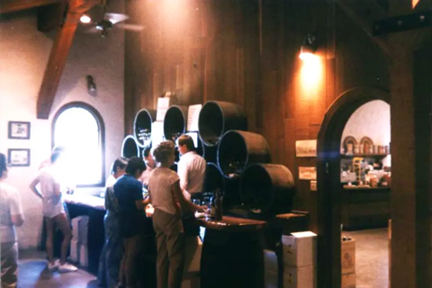
V. Sattui president Tom Davies works behind the bar in the original V. Sattui tasting room.
“It really seemed to explode after that,” said Davies, who has been Sattui’s right-hand for 46 years. (His job interview took place over a game of ping pong, and he started at $5 an hour.) Before the renovation, Davies said V. Sattui would regularly see 1,500 people on a Saturday. Unlike most Napa Valley wineries, V. Sattui can host weddings, allow picnicking and operate a deli because one acre of the property is zoned for commercial use instead of agricultural use.
Launching Napa’s new tourist hub, again
V. Sattui has one of the most diverse wine portfolios in Napa Valley featuring more than 50 different wines.
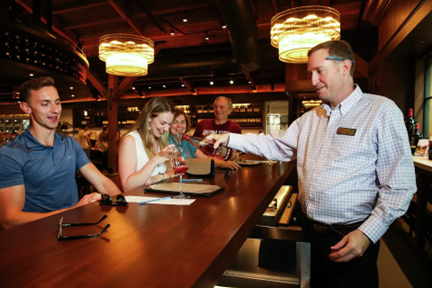
Bartender Justin Webster pours a glass of wine for Marcel Koszkul, left, and Hannah Laird during their visit to V. Sattui Winery. Yalonda M. James/S.F. Chronicle
The new building, named Mercato del Gusto, is now a destination in and of itself, and rivals Napa Valley’s legendary Oakville Grocery, located less than five miles south on Hwy 29. V. Sattui expanded the open, barn-like structure by 28 feet, which more than doubled the size of the deli and marketplace, and created a vaulted ceiling. The stucco has been replaced by stone, and new windows brighten the previously dark space.
The interior is simple — wood floors, stone walls, redwood beams and bright chandeliers — yet, at the same time, overwhelming. Visitors are greeted by counters and fridges stocked with prepared foods, pantry staples and picnic supplies, including olive oils, gelato and desserts. On the right, cheesemongers hand out free samples from a massive wall of over 200 cheeses sourced from around the globe. The deli is on the left, offering more than a dozen sandwiches, salads, pastas and barbecue items on weekends from former Michael Mina chef Jefferey Lloyd. There’s a selection of antipasti, including stuffed olives and pickled okra, and specialty items, like bacon-wrapped dates and fried macaroni and cheese bites. A meat case is filled with charcuterie, including V. Sattui’s housemade bresaola — also available in panini.
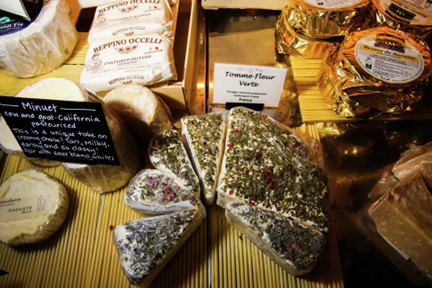
V. Sattui’s new Mercato del Gusto features more than 200 different cheeses from around the globe. Yalonda M. James/S.F. Chronicle
As visitors move through the Mercato, they’ll happen upon a wine shop and then four tasting bars. The centerpiece is a massive and energetic round bar that can seat up to 24 people. V. Sattui has arguably the most diverse wine lineup in Napa Valley (bottles cost $29-$185), sourcing from over 200 acres of estate fruit throughout Northern California, plus additional vineyards. The wines include an unconventional white blend of Chenin Blanc, Albarino and Pinot Grigio; a Riesling from Napa’s Mt. Veeder; and a dozen single-vineyard Zinfandels. “To have a Riesling from Napa Valley, and Mt. Veeder, is unheard of,” said V. Sattui winemaker Jason Moravec. “Most other wineries would have ripped it out a long time ago and planted Cabernet.”
The winery is also looking to attract younger generations of drinkers with a pair of natural wines, a Lambrusco-inspired sparkling wine blend of Malbec and Syrah — which Davies said was specifically created to pair with hamburgers — and a non-alcoholic Gewurztraminer.

V. Sattui Winery is family-friendly and offers flights of grape juice to children. Yalonda M. James/S.F. Chronicle
Tastings start at $45, but the winery just launched free flights, featuring three wines, on Tuesdays and Thursdays. V. Sattui also started a by-the-glass program, onto which visitors can add food pairings. Created by V. Sattui’s executive estate chef Stefano Masanti, who also owns a Michelin-starred restaurant in the Italian Alps, plates ($10 each) include vegan foie gras, veal cheek with potato cream and branzino tartare. Guests can also opt for the chef’s choice pairings ($27 for three plates, $40 for five), which make for a solid lunch.
Upgrades are also available for tasting flights, including a cheese and charcuterie-inspired s’mores pairing for two ($20). Guests can toast their own cheesy marshmallows over tabletop fuel cans.
“It’s like a cheese plate and s’mores had a baby,” said Davies.
