
 Reservation
 Contact

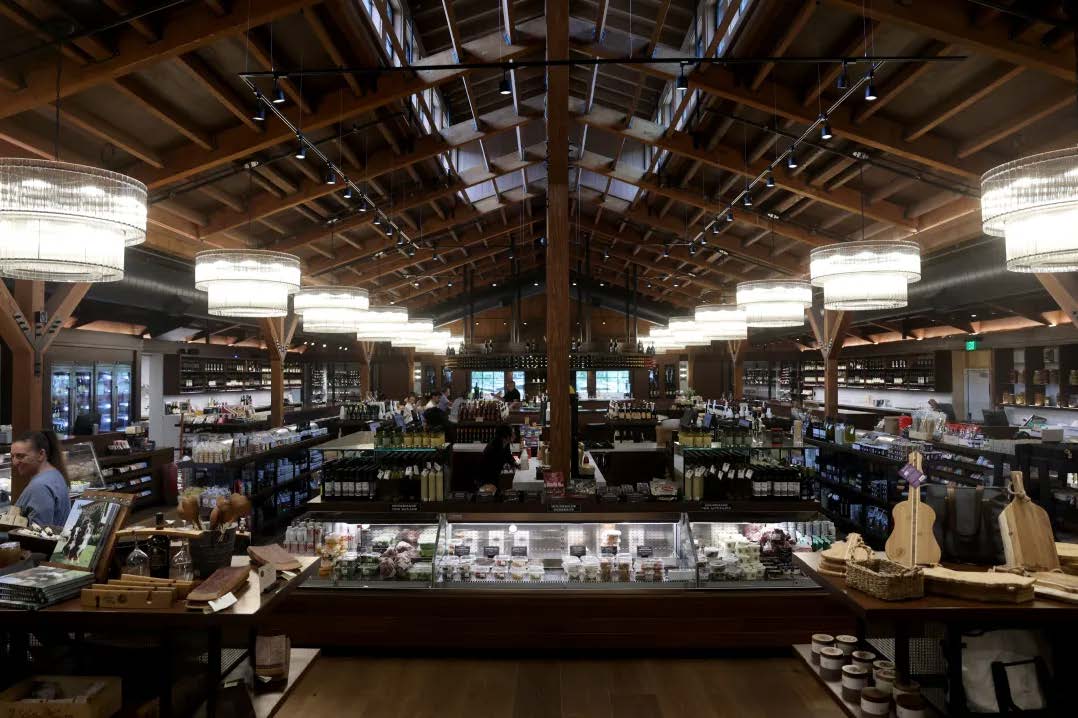
The newly renovated customer retail and tasting space at V. Sattui Winery in St. Helena Wednesday, Sept. 24, 2025. (Beth Schlanker / The Press Democrat)
By SASHA PAULSEN
PUBLISHED: September 26, 2025 at 3:55 PM PDT
Fifty years after Dario Sattui slept in a van while building his winery from scraps, St. Helena’s V. Sattui Winery is celebrating its anniversary with something far grander: a decadelong renovation that has transformed its original tasting room into the bustling Mercato del Gusto.
The Mercato, which opened this summer, is a bright, expansive space designed for exactly what Sattui always wanted his winery to be — a place where wine is part of life, shared with food, family and conversation. Visitors now find cheeses curated by longtime local cheesemonger James Ayers, deli offerings from chef Jeffrey Lloyd, desserts by chocolatier Katryana Zide, and a round tasting bar that encourages strangers to talk beneath a chandelier made of bottles.
It is the boldest project the winery has taken on since Sattui first opened the doors in 1976. And like those early days, it demanded sacrifice. For the last 13 months of construction, staff worked from trailers on the picnic grounds. Business took a hit. The project stretched on for 10 years, a delay that Davies said was driven primarily by navigating city regulations. But when the doors reopened, the payoff was clear — a marketplace buzzing with the same sense of community that defined the winery from the start.
Scrappy beginnings
That sense of community was born from necessity. In the mid-1970s, Sattui had little more than $8,000 in savings and a dream to revive the family winery his great-grandfather, Vittorio, had started in San Francisco in 1885. Prohibition shuttered the original, but Sattui was determined to bring the name back to life in Napa Valley.
“I didn’t have a playbook,” Sattui, now 84, recalled. “I just did it my way.”
His father drove a cab. His mother kept books. She chipped in $3,000. What he didn’t know then was that UC Davis had just issued a report estimating it would take $1 million to start a winery. Years later, the same university invited him back to teach seminars on how to do it with far less.
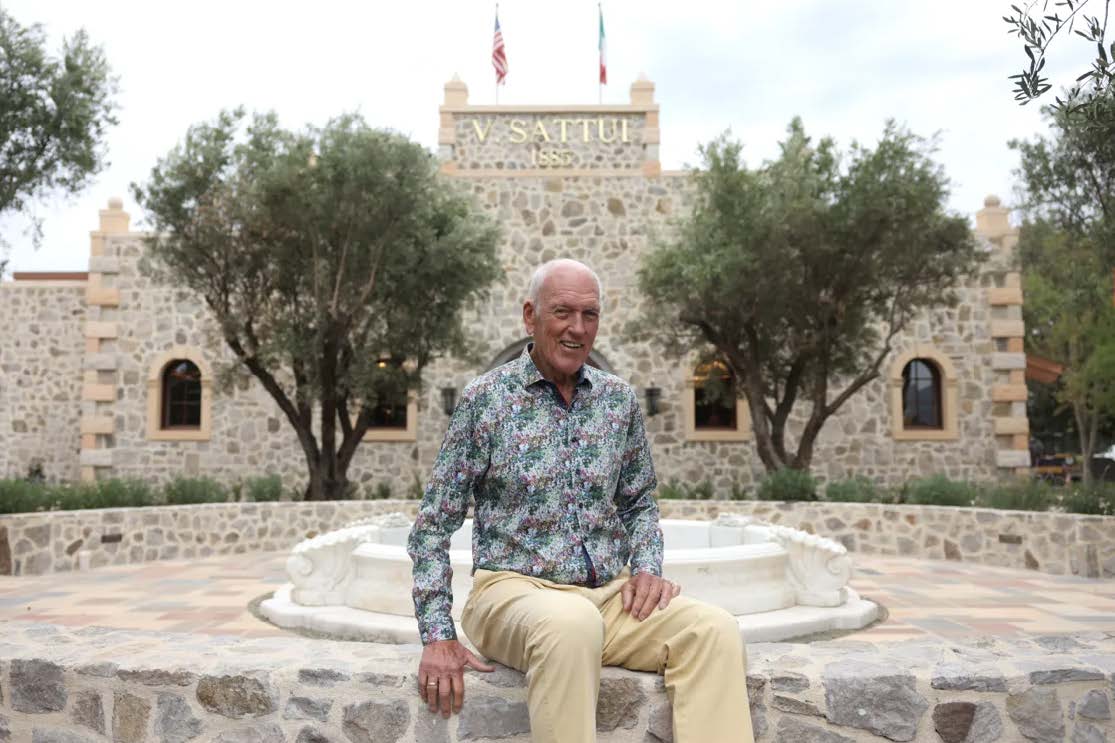
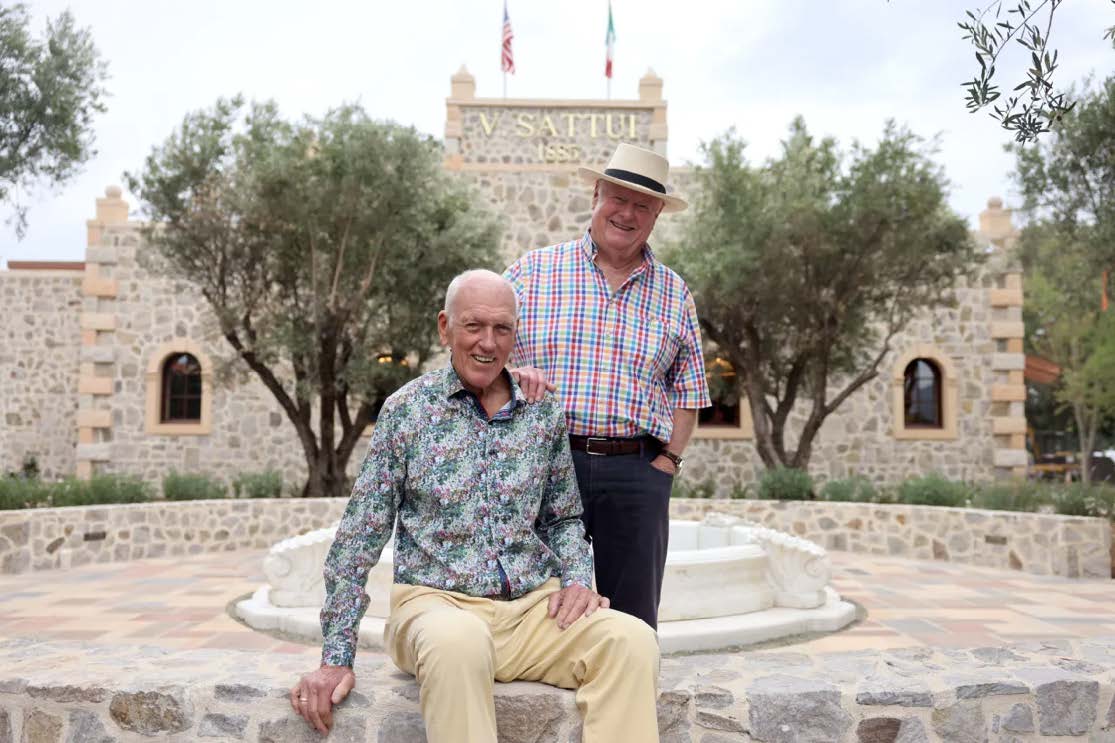
A friendly real estate agent bought a piece of land in St. Helena and leased it back until he could pay. Sattui built his first structure for $12 a square foot, paying workers $6 an hour and cobbling together whatever he could find. His desk was a door set on two wine barrels. Receipts were written by hand. When he needed to use the phone, he called collect. He relied on his great-grandfather’s old counting machine because he couldn’t afford a cash register.
“We were sleeping in a VW van,” he said. “You name it, I didn’t have it.” He made his first vintage in 1975, bottling wine even before he had a proper tasting room. When the winery finally opened on March 4, 1976, neighbors and his banker showed up to make sure he earned $170 that first day. The year’s total was just $2,640. His wife urged him to give up. But Sattui pushed ahead.
Three decisions
From the start, he made three decisions that set the course for V. Sattui’s future.
He sold directly to customers rather than through distributors, keeping his profits and building lasting relationships. He located inside St. Helena’s city limits, which allowed him to sell food with wine — something Napa County agricultural rules prohibited. And he emphasized hospitality at every turn.
“Other wineries were putting up signs: ‘Don’t walk on the lawn,’” he said. “I wanted people to sit on the lawn, brings their children, their dogs, have a picnic.”
That philosophy endures in the Mercato today, where visitors can pair a sandwich with a bottle, or order small plates designed to share.
One more decision proved just as crucial: hiring Tom Davies.
Sattui met Davies, then a young job-seeker camping at Bothe State Park, over a ping-pong game. He brought him on, and nearly five decades later, Davies is president of V. Sattui Winery. While Sattui now spends much of his time in Italy or at Castello di Amorosa, the medieval-style winery he built later in Calistoga, Davies oversees the day-to-day operations and led the effort to complete the Mercato project.
He remembers the early days vividly: pressing every last drop from the grapes, gluing labels onto bottles — some of them crooked — and turning off every light to save pennies.
“He’d press every last bit of juice from the grapes,” Davies recalled. “Some of those wines were — tannic.”To this day, he said, he still can’t leave a room without flicking the switch.
Food, wine and hospitality
The Mercato del Gusto represents the winery’s boldest investment since those scrappy beginnings. What once was a modest tasting room and deli counter is now a European-style marketplace, humming with energy.
Davies first met chef Stefano Masanti more than a decade ago while visiting Italy. After tasting his cooking, he predicted Masanti would earn a Michelin star — and a year later, he did. Today, Masanti spends part of each year at V. Sattui, creating dishes that range from salmon carpaccio to vegan foie gras.
Ayers stocks 250 to 300 cheeses at a time, sourced from across the world. Zide adds chocolates and pastries. Tastings now range from $45 for five wines to free three-wine flights on Tuesdays and Thursdays, a deliberate nod to the winery’s past.
“We always said if someone left Sattui without buying a bottle of wine, it was our fault, for not offering something they liked in their price range,” Davies said.
V. Sattui today produces more than 50 wines, from $29 bottles to $200 cabernets. Winemaking is led by director Brooks Painter, alongside winemakers Peter Villeno, Jason Moravac and Audrie Walsh.
Walsh said working at a family winery gave her freedoms she never found in larger operations. Her latest project, an orange Albariño fermented on its skins with native yeast, even features a label she designed herself.
Jason Moravac, who joined the winery in 2015, said the same. After years at corporate operations, “it was a breath of fresh air to come to a family winery,” he said. “I can do more than I could have imagined.”
Other wines carry stories of the winery’s past. La Merica, a red blend, honors the Italian immigrants who gave that name to their new home. Entanglement, a Rhône-style blend, pays tribute to Julian Schwinger, the Nobel-winning physicist who invested $20,000 in Sattui’s fledgling dream. Sparkling Bacci was created as a playful wine to pair with hamburgers.
Holding onto the vision
For all the change, Davies insists the winery has not lost sight of what made it special in the first place.
“We created a generation of loyal wine drinkers,” he said. “Today I think Napa has lost its way, a little. It seems so expensive and exclusive. I’d like to lead the charge to get back to something of the old days.”
“We’ve always been about wine and hospitality,” he added, “and value.”
That means the lawns are still open, kids and dogs are welcome, and there is a glass of wine for nearly every palate. As Sattui put it: “I did it the hard way. But I marched to my own drummer.”
